How Grooming Improves Mental Health (Research)
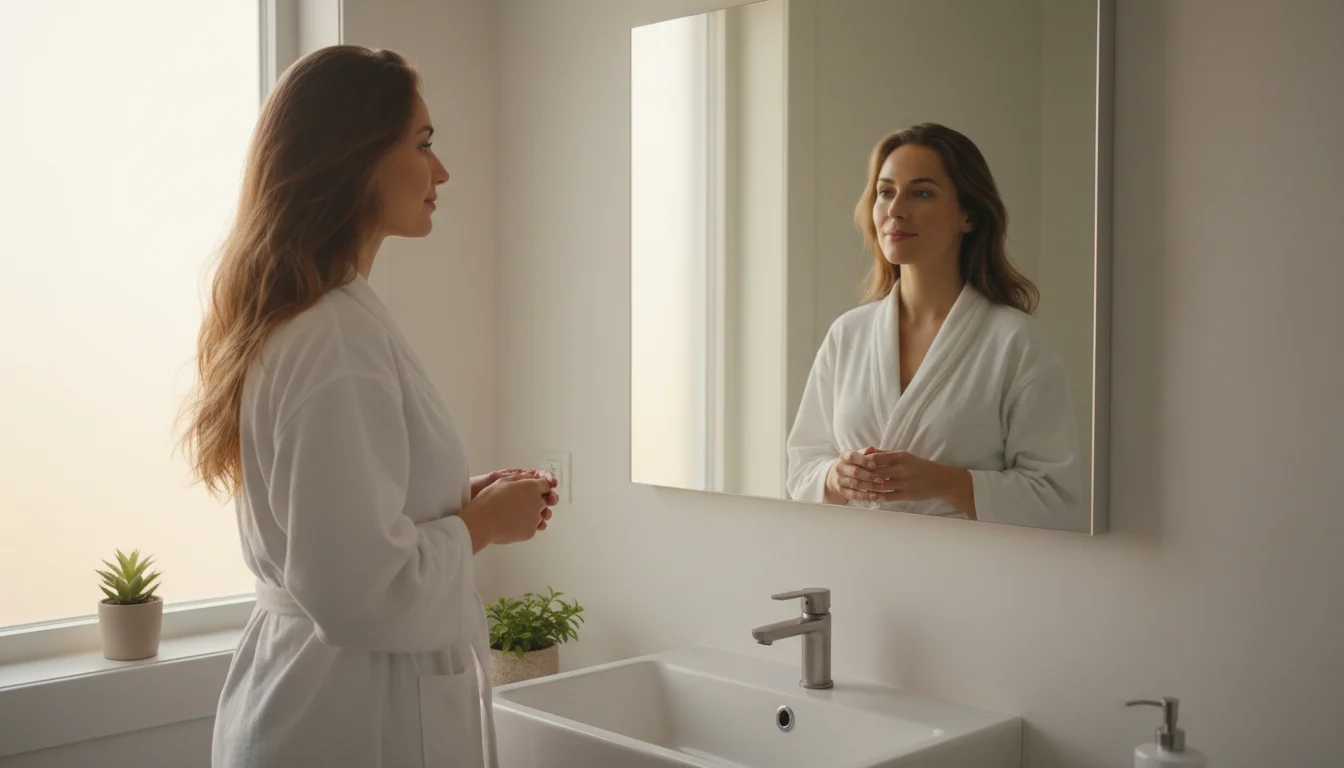
On the worst days, brushing your hair feels like the last thing worth doing. The laundry is piling up, the baby was up at 3 AM, and the idea of “self-care” sounds like something written by a person who has never had to fish a crayon out of a toilet. But here is the thing: the small, boring act of washing your face and running a brush through your hair is not vanity. It is one of the most accessible mental health tools you already own.
Psychology research backs this up. And not in the vague “treat yourself” way. In the measurable, peer-reviewed, your-brain-chemistry-actually-changes way.
How Self-Care Rituals Trigger Dopamine
Dopamine, the neurotransmitter tied to motivation and reward, does not only fire when you accomplish something big. It responds to completion of small, predictable tasks. Finishing a short grooming routine gives your brain a signal: you did something. You followed through.
What makes this even more interesting is the difference between a habit and a ritual. Habits trigger dopamine when you complete the task. Rituals trigger dopamine when you begin, because your brain has associated the action with something meaningful about who you are. Framing your morning face wash not as a chore but as a small act of self-respect changes the neurochemical response. Your brain starts rewarding you just for showing up.
This is not woo. Research on mindfulness and self-regulation shows that ritualized practices accelerate the formation of neural pathways that support sustained behavioral change. The more consistently you do it, the stronger the pattern becomes.
How Looking Put-Together Boosts Confidence
In 2012, researchers Adam and Galinsky at Northwestern University published a study that coined the term “enclothed cognition.” They found that wearing a white lab coat improved participants’ performance on attention tasks, but only when they believed it was a doctor’s coat. The clothing carried symbolic meaning, and that meaning changed how their brains performed.
The same principle applies to grooming. When you look in the mirror and see someone who took five minutes to take care of themselves, your self-perception shifts. It is not about looking perfect. It is about the psychological weight of the signal you send yourself: I am someone worth taking care of.
A 2015 study published in the International Journal of Cosmetic Science by van Paasschen and colleagues found that simple grooming behaviors, like applying fragranced deodorant, improved participants’ body image accuracy. People who tended to overestimate their body size made significantly more accurate self-assessments after grooming. The researchers concluded that everyday grooming behaviors produce measurable psychological advantages beyond basic hygiene.
Why Routine Helps With Anxiety and Depression
If you have ever gone through a period of high anxiety or depression, you may have noticed that one of the first things to fall apart is your routine. You stop showering regularly. You wear the same clothes for three days. You stop brushing your teeth at night.
This is not a character flaw. It is a well-documented symptom. And the research on routine disruption shows a clear, bidirectional relationship with mental health.
A 2020 study published in the Journal of Global Health by Hou, Lai, Ben-Ezra, and Goodwin examined daily routine disruption during the COVID-19 pandemic. They found that disrupted primary routines, defined as hygiene, sleep, and eating, had a more significant impact on mental health than disrupted secondary routines like exercise or socializing. They also found that maintaining even basic daily structure served as a buffer against anxiety and depressive symptoms.
The takeaway for moms is practical: you do not need a 90-minute morning routine with journaling, meditation, cold plunges, and green juice. You need to wash your face, brush your teeth, and get dressed. Those three things, done consistently, create a foundation of normalcy your brain can rely on. As the researchers put it, “everyday life can actually be seen as the fundamental context for resilience during trauma.”
Self-Care Is Anxiety Management, Not Indulgence
There is a cultural problem with the phrase “self-care.” It has been co-opted by marketing to mean bath bombs and $80 candles. That framing makes it feel like a luxury, something you earn after everything else is done.
But in clinical psychology, self-care refers to the basic maintenance behaviors that keep a person functional. Hygiene. Nutrition. Sleep. Movement. These are not rewards. They are prerequisites.
When you skip grooming because you are overwhelmed, you create a feedback loop: you feel bad, so you stop taking care of yourself, which makes you feel worse about yourself, which makes the next day harder. Therapists who work with postpartum depression and anxiety often start with exactly this: can you shower today? Can you put on clean clothes? Not because those things solve the problem, but because they interrupt the spiral.
A comprehensive review across 51 studies involving nearly one million participants across 32 countries found that more severe disruptions to daily routines were positively associated with higher symptoms of depression, anxiety, and psychological distress. Restoring small routines was consistently linked to improved coping.
A Simple Daily Grooming Routine for Mental Health
This is not about adding more to your plate. It is about protecting the bare minimum on the days when the bare minimum is all you have.
Morning (5 minutes or less):
- Wash your face with water or a gentle cleanser
- Apply moisturizer and sunscreen
- Brush your hair
- Get dressed in something that is not what you slept in
Evening (3 minutes or less):
- Wash your face
- Brush your teeth
- Apply a simple moisturizer
That is it. No 12-step routine. No expensive products. No guilt if you skip the moisturizer some nights. The point is the pattern, not the perfection.
The Days It Matters Most Are the Days It Feels Hardest
The cruel irony of depression and anxiety is that the activities most likely to help are the ones that feel impossible. On days when getting out of bed feels like running a marathon, the idea of a “grooming routine” can sound absurd.
But the research is consistent: maintaining basic self-care behaviors during difficult periods predicts better outcomes. Not because washing your face cures depression, but because it preserves a thread of normalcy. It keeps the feedback loop from spiraling. It gives your brain one small completed task to build on.
You are not being vain when you take five minutes to take care of your appearance. You are doing something your brain is wired to reward. You are giving yourself structure in the chaos. You are interrupting the cycle that tells you nothing matters.
It matters. And you are worth the five minutes.
If you want to build on that foundation, our 5-minute skincare routine breaks down exactly what products to use. And for the bigger picture of caring for yourself as a mom, explore our self-care guide.